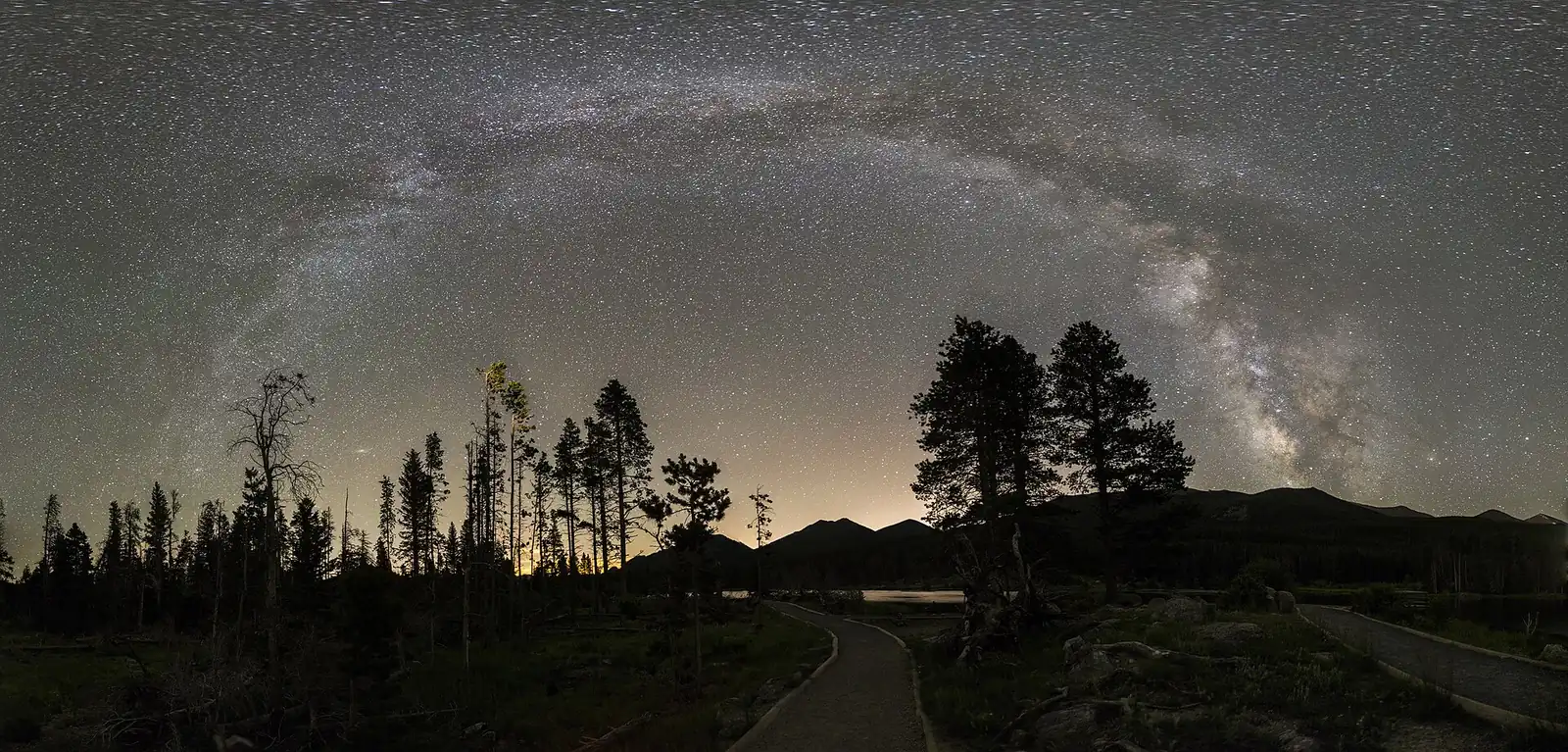
Know what's in the sky before you step outside, and how to see it better.
The Star Hop arrives every Sunday afternoon with the week's sky: which nights are worth it, what time to look and which way to face, plus plain help for getting more from your telescope or camera.
The Hop: each week, a short route from a star you already know to something fainter.
01 From the card library
- Magnification is the telescope's focal length divided by the eyepiece's focal length. A 1,000 mm telescope with a 10 mm eyepiece gives 100x; swap to a 25 mm eyepiece and it drops to 40x. University of Sheffield, PHY217 telescope optics problems,
- The 500 rule: divide 500 by your lens focal length times the crop factor to get the longest untracked exposure in seconds before stars start to trail. A 20 mm lens on a full-frame camera gives 25 seconds; on a 1.5 crop sensor, about 17. New Mexico Tech, Magdalena Ridge Observatory, "Stack It",
- Exit pupil is the width of the beam of light leaving the eyepiece: aperture divided by magnification. A 100 mm telescope at 50x gives a 2 mm exit pupil. Sky & Telescope, "Choosing Your Telescope's Magnification",
02 Scope and camera numbers
Put in your telescope and eyepiece to see the power, the field and the faintest detail, or your lens to see how long a star photo can run. Scope math
03 The week's sky, every Sunday
- The Week Ahead: a one-glance table of the week's Moon, planets and events, with times for US time zones and what you need to see each one.
- Through the Eyepiece and Capture: how magnification, eyepieces and mounts work, and simple settings for photographing the Moon, meteors and the night sky. No gear pitches.
- The Hop: one route each week from a bright star to something fainter, with what it looks like in binoculars and in a small telescope.
Tonight and beyond

Sky notes
No sky notes yet. The weekly email comes first; longer notes follow once they are checked.